
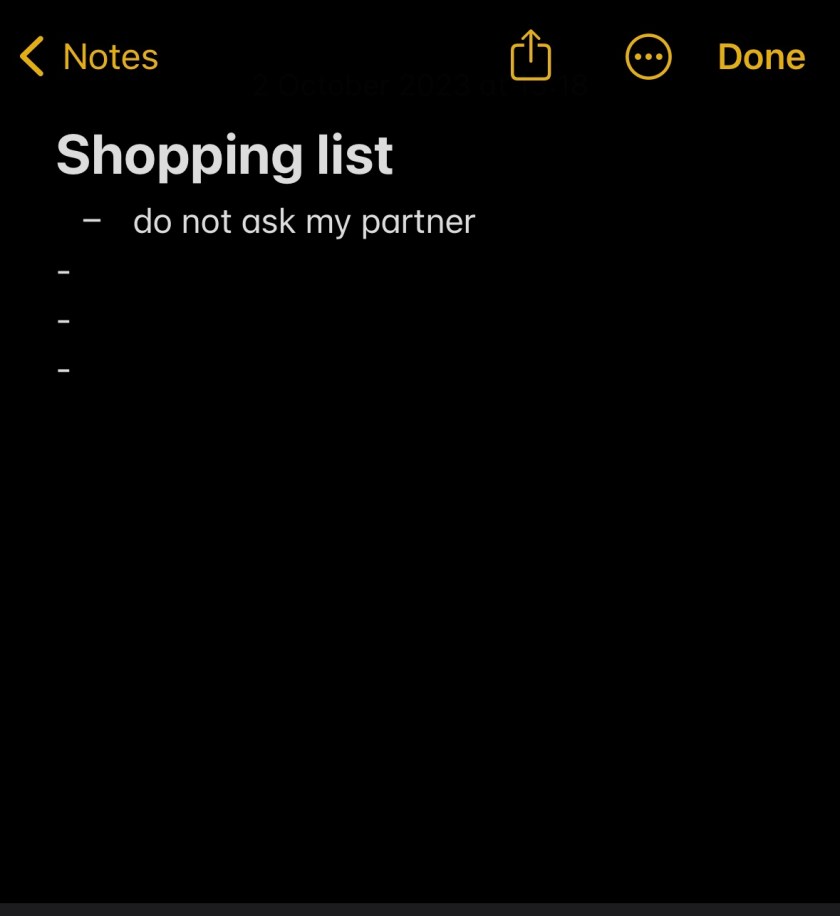
“Just tell me what to do and I’ll do it”
“Going to the supermarket – what should I buy?”
“We should get more cat food”
“Remind me to clean the bbq this weekend”
Sounds familiar? If you are the one saying these things in the house – keep reading. You need some advice.
When you’re in a relationship, communication is key. Very often though, you might say or ask things with the right intention, but are actually putting your mental load on your partner.
What is the mental load?
Here’s the definition: ‘Mental load’ means the mental and emotional effort or burden of being responsible for thinking about, planning and organising all the parts of life, for us but also for potential children, partner and other family members.
Above I listed some examples, but this list goes on and on. Let’s take a simple example that every household deals with: eating dinner.


“bUt I cOoked tWiCe tHiS wEeK” – bravo, but that is just the executing task. Before you get to that point, you need to:
- Assess what your week will look like – who is home when and how often are you eating at home? Are people coming over or is it just your family?
- Come up with a meal plan for that week.
- Check your pantry and fridge to see what you still have in there. Outside of the meals, check what else needs refilling (milk, butter, coffee, toilet paper,…)
- Make a grocery list
- Go to the store and buy the groceries
This is a small fraction of a running list of small decisions and knowledge required to maintain a household. So if you are just cooking the meal, you got the easy part.
And this applies to all areas: going on holidays, the housekeeping, buying gifts, taking care of the kids.
How to better divide the mental load?
- It starts with just the awareness of every question you ask your partner or statement you make to them. What can I do already before even asking?
- Come with an active plan that shows you put in some thinking: “I already did X and Y, I was thinking to do Z next unless you disagree?”
So taking the household for example now – Instead of asking your partner: “what can I do?” Start by pro-actively looking around the house and seeing if there’s items misplaced that you can put back. Check trash levels. Check if the floor can use vacuuming. If the dishwasher is unloaded. If there’s laundry to be done or clean laundry to be stored, …. (it does not end here)
If that’s done and you can’t think of anything else, you can instead say: “hey I did this and this already and am about to do X unless you want me to do something else first?”
Live mental load example
Let’s say you are going away for the weekend as a couple. And I’m now gonna skip the part of planning where to go, packing, going there and the decisions you possibly have to make when you are on location. When are you coming back? Do you have food when you are home or does it still need to be planned upfront?
I had this exact scenario happening this weekend – we were going to Belgium for my family weekend and I knew we would be home around 16-17h. Giovanni (our toddler) needs to eat around 17.30 and goes to bed around 19 and we would probably be tired when we got home. So I figured we make something quick and easy: “vol-au-vent” with some french fries. But the thing is, if I didn’t think ahead, plan that and shopped for it, we would have ended up in a situation where my husband would have asked: “what do we eat this evening?”

So for the partner, already open this discussion before or on the weekend: “hey I know we will be home around that time on Sunday so we might want to buy stuff for dinner before we leave. What about we cook X or Y? I can go to the supermarket while you do Z” –
1. You show you thought about it – relieving part of the mental load
2. You made an active proposal to what to eat – also relieving that part
3. You relieve the part of the shopping.
If you and your partner decide on what to eat, don’t say: ok so what should I buy. Make a list, tell your partner you texted it and to let you know if anything is missing.
Ok, I can probably go on and on about this topic but I will stop here for now. Do you recognize this? Let me know your thoughts in the comments!

 Claudiavrancken.com